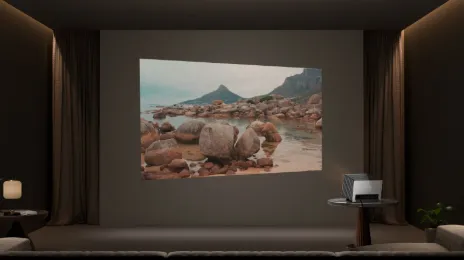
The pursuit of the perfect home theater experience has always been about closing the gap between the local multiplex and the living room. For decades, this meant chasing higher resolution, moving from standard definition to high definition, and eventually to the ultra-high definition standards we enjoy today. However, while resolution has plateaued for many viewers, a new frontier has emerged in the form of pure color performance and light source technology. The shift from traditional lamps and single-laser systems to pure RGB triple-laser technology is fundamentally changing what is possible in home entertainment, offering a level of vibrancy and realism that was previously unattainable outside of professional mastering studios.
The Mechanics of Light: Lamps Versus Lasers
To understand why this shift is so significant, one must look at the mechanics of how images are produced. Traditional home cinema relied heavily on high-pressure mercury lamps. These bulbs were the standard for years but came with inherent limitations. They generated massive amounts of heat, required significant cooling fans that introduced unwanted noise, and their light output degraded rapidly over time. Furthermore, the light they produced was a broad-spectrum white light that had to be filtered down to create colors, a process that inevitably resulted in a loss of brightness and color volume.
The industry stepped forward with the introduction of single-laser projection. This technology typically uses a blue laser light source combined with a yellow phosphor wheel to generate white light, which is then separated into primary colors. While this was a massive leap forward in terms of longevity and brightness compared to lamps, it still relied on a filtering process that limited the purity of the final image.
Enter RGB triple-laser technology. Unlike its predecessors, this architecture employs discrete red, green, and blue lasers directly. There is no phosphor wheel and no white light that needs to be filtered. Instead, the projector mixes these pure laser wavelengths to create every color on the screen. This direct approach eliminates the light loss associated with color wheels and filters, resulting in an image that is not only brighter but significantly more chemically pure.
Achieving True BT.2020 Coverage
The most measurable impact of this technological leap is found in color space coverage. In the world of video mastering, color fidelity is defined by standards such as Rec.709 (standard HD TV) and DCI-P3 (digital cinema). However, the gold standard for the future of ultra-high definition content is BT.2020. This wide color gamut represents the closest approximation to the full spectrum of colors the human eye can see.
Single-laser and lamp-based projectors often struggle to fully cover the DCI-P3 space, let alone BT.2020. They often rely on color filters to expand their gamut, which drastically cuts down brightness. Triple-laser systems, by virtue of using pure spectral light, can achieve nearly 100 percent of the BT.2020 color space without sacrificing luminance. This means that viewers are seeing colors—deep cyans, rich crimson reds, and vibrant lime greens—that simpler projectors physically cannot reproduce. When watching nature documentaries or visually stylized films on a 4K projector equipped with RGB lasers, the difference is not just noticeable; it is transformative.
Redefining Brightness With the Helmholtz-Kohlrausch Effect
Another critical advantage of RGB laser systems involves the perception of brightness. In video metrics, brightness is typically measured in ANSI lumens, which tests white light output. However, the human eye perceives saturated colors as brighter than they theoretically measure, a phenomenon known as the Helmholtz-Kohlrausch (HK) effect.
Because triple-laser projectors produce such deeply saturated, pure colors, the perceived brightness is often significantly higher than a standard lamp projector with the same lumen rating. A generic 3000-lumen lamp projector might look washed out in a room with ambient light, whereas a triple-laser model with the same rating will appear punchy and vivid because the colors cut through the ambient light more effectively. This allows for a more flexible installation in living rooms where controlling every photon of ambient light isn’t always possible.
Durability and Reduced Maintenance Needs
Beyond visual performance, the practical benefits of solid-state RGB illumination cannot be overstated. Traditional lamps are notorious for dimming. A bulb might lose half its brightness within the first few thousand hours of use, requiring expensive replacements and constant calibration to maintain image quality.
In contrast, RGB laser modules are designed for extreme longevity, typically rated for 20,000 to 30,000 hours of use. This translates to over a decade of watching a movie every single night without a significant drop in light output. For the consumer, this means the maintenance-free reliability of a television combined with the massive screen size of projection. The total cost of ownership decreases significantly when bulb replacements are removed from the equation.
Why Gamers Benefit From Wider Color Gamut
This reliability and performance jump has also caught the attention of the interactive entertainment sector. Modern video games are often mastered with wider color palettes than films, utilizing dynamic HDR lighting engines that demand high contrast and intense color saturation. A serious enthusiast looking for a 4K gaming projector will find that triple-laser models offer distinct advantages.
The removal of the color wheel, which is necessary in single-laser DLP systems, eliminates the rainbow effect—a visual artifact where flashes of red, green, and blue separate during fast motion. For fast-paced gaming, this results in a stable, comfortable image that retains its integrity even during chaotic action sequences. Furthermore, the instant-on capability of lasers mirrors the convenience of modern electronics. There is no warm-up time required for the colors to stabilize, nor is there a cool-down period needed to protect a fragile bulb.
The Future of Home Entertainment
The evolution of home cinema is no longer just about adding more pixels; it is about improving the quality of those pixels. By generating light directly from the source in its primary colors, RGB triple-laser technology removes the intermediaries that have historically diluted image quality. It offers a viewing experience that is more chemically accurate to the director’s intent, more durable for the owner, and more immersive for the gamer. As content creators continue to push the boundaries of HDR and wide color gamuts, the hardware required to display it must keep pace. RGB laser projection is not merely an incremental update; it is the new baseline for premium visual experiences in the home.

Ferderik Moller is a passionate blogger with expertise in massages, relationships, and festivals. He shares unique insights, expert tips, and creative ideas to nurture well-being, strengthen bonds, and elevate the joy of celebrations and special moments.