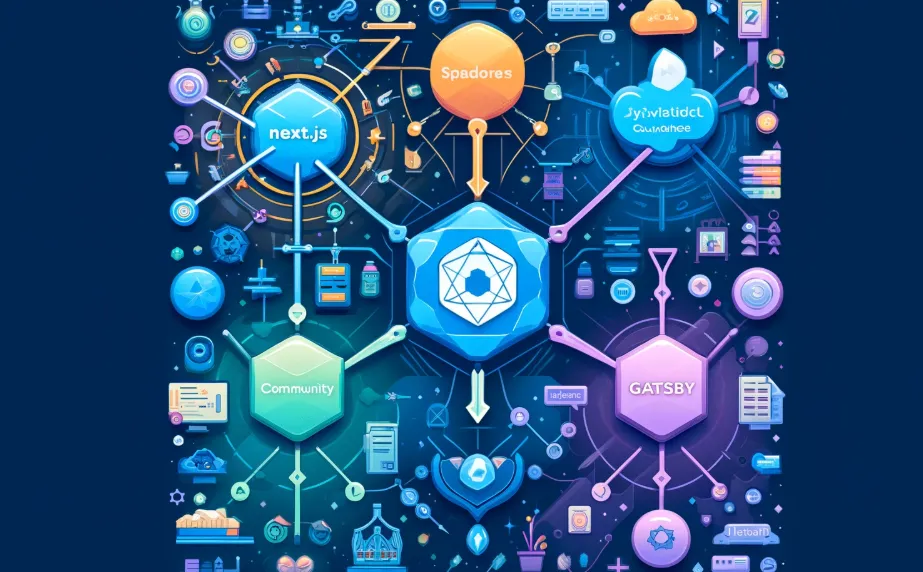
The evolution of the web has transformed how businesses design and deliver digital experiences. In the early days, most websites were static and content-driven—primarily serving informational pages such as blogs, company profiles, or documentation. While these sites were effective for publishing content, they lacked interactivity, scalability, and performance optimization for modern user expectations.
Today, the front-end ecosystem has shifted toward dynamic platforms capable of delivering highly interactive, scalable, and performance-oriented experiences. Frameworks such as Next.js and Gatsby have played a major role in enabling this transformation. By combining the strengths of modern JavaScript, server-side rendering, static site generation, and API integrations, these frameworks allow developers to build fast, flexible, and scalable applications.
As a result, many organizations now look to hire Next JS developers or hire Gatsby developer to modernize their front-end architecture and improve performance, user experience, and scalability.
The Shift from Static Websites to Dynamic Platforms
Traditional websites were typically built using basic HTML, CSS, and minimal JavaScript. These sites relied on static page delivery, meaning every page was pre-built and served exactly as stored on the server.
While this approach had advantages—such as simplicity and reliability—it also had several limitations:
- Limited interactivity and dynamic functionality
- Slower performance for large-scale content updates
- Difficulty integrating APIs and third-party services
- Poor scalability for growing digital platforms
As businesses began offering richer digital experiences—such as real-time dashboards, e-commerce platforms, SaaS tools, and personalized content—static architecture alone could no longer meet the demands.
This shift created the need for modern frameworks capable of combining static performance with dynamic capabilities.
The Rise of Modern React-Based Frameworks
React fundamentally changed front-end development by introducing component-based architecture and efficient rendering through the virtual DOM. However, building production-grade applications directly with React often required additional configuration for routing, rendering, optimization, and deployment.
This is where frameworks like Next.js and Gatsby emerged.
Both frameworks extend React’s capabilities while addressing key architectural concerns such as performance, SEO optimization, routing, and build processes. They provide opinionated structures that simplify development while ensuring scalable and maintainable applications.
How Next.js Powers Dynamic Web Platforms
Next.js has become one of the most widely adopted frameworks for building modern web applications. It enables developers to build full-stack React applications with minimal configuration while supporting multiple rendering strategies.
Key capabilities of Next.js include:
Server-Side Rendering (SSR)
Server-side rendering allows web pages to be generated on the server before being sent to the browser. This improves initial page load times and enhances SEO performance because search engines can easily crawl fully rendered pages.
For applications such as e-commerce platforms, dashboards, and SaaS products, SSR helps deliver dynamic data while maintaining strong performance.
Static Site Generation (SSG)
Next.js also supports static site generation, where pages are built during the build process and served as static files. This approach ensures extremely fast load times while maintaining scalability.
Developers can even combine static and dynamic rendering within the same application.
API Routes and Full-Stack Development
Another significant advantage is built-in API routes. Developers can create backend endpoints directly within a Next.js application, enabling full-stack capabilities without maintaining separate server infrastructure.
This makes the framework particularly attractive for startups and fast-scaling products.
Because of these advantages, many companies actively hire Next JS developers to build high-performance applications that balance scalability, SEO optimization, and developer productivity.
Gatsby and the Power of Static-First Architecture
While Next.js focuses on hybrid rendering, Gatsby is known for its static-first approach to building highly optimized websites.
Gatsby uses static site generation combined with a powerful data layer to create extremely fast websites. It pulls content from various sources—such as CMS platforms, APIs, Markdown files, and databases—during the build process and converts it into static pages.
This architecture offers several benefits.
Exceptional Performance
Because Gatsby pre-builds pages into static assets, websites load very quickly. Static files can be distributed through CDNs, reducing server processing and improving global performance.
Optimized Asset Handling
Gatsby automatically optimizes images, code splitting, and asset delivery. This ensures that users download only the resources necessary for the page they are viewing.
Strong Content Integration
One of Gatsby’s most powerful features is its GraphQL-based data layer. This allows developers to query content from multiple sources in a structured way and combine it into a unified front-end application.
For content-heavy platforms such as blogs, documentation sites, marketing pages, and media platforms, Gatsby offers a highly efficient solution. As a result, many companies prefer to Hire Gatsby developer who can build scalable content platforms with optimized performance.
Headless CMS and Modern Content Delivery
The shift toward dynamic front-end frameworks has also encouraged the adoption of headless content management systems.
Traditional CMS platforms tightly couple the front-end presentation layer with the backend content system. This limited flexibility and made it difficult to deliver content across multiple channels.
Modern frameworks like Next.js and Gatsby integrate seamlessly with headless CMS platforms such as Contentful, Strapi, Sanity, or Ghost. These systems allow content to be managed independently while the front-end framework handles presentation and delivery.
This architecture provides several advantages:
- Faster content publishing workflows
- Multi-platform content delivery (web, mobile, apps)
- Improved scalability and performance
- Greater flexibility for developers and content teams
By separating content management from front-end delivery, organizations can build highly adaptable digital platforms.
Performance and SEO Advantages
Performance and search visibility remain two of the most important factors for modern websites. Frameworks like Next.js and Gatsby are designed to address both concerns.
Features such as static generation, server-side rendering, optimized asset loading, and code splitting help reduce page load times and improve user experience.
Search engines also benefit from pre-rendered content, which improves indexing and ranking potential. This is particularly important for businesses that rely on organic traffic, such as e-commerce platforms, media sites, and SaaS companies.
Scalability for Growing Digital Products
Modern web platforms must support millions of users, frequent content updates, and integrations with various third-party services.
Both Next.js and Gatsby enable scalable architectures through features such as:
- CDN-based content delivery
- modular component-based design
- integration with microservices and APIs
- compatibility with serverless infrastructure
These capabilities make it easier for engineering teams to maintain performance even as digital products expand in complexity and scale.
The Growing Demand for Specialized Front-End Talent
As front-end architecture becomes more sophisticated, organizations increasingly require developers with expertise in modern frameworks and performance optimization.
Professionals experienced in React-based frameworks, headless CMS integration, and performance-focused architecture play a critical role in building modern digital platforms. This growing complexity is one reason companies continue to hire Next JS developers and Hire Gatsby developer who can implement scalable front-end solutions.
The Future of Front-End Architecture
The front-end ecosystem continues to evolve rapidly. Concepts such as edge rendering, server components, and AI-driven personalization are already influencing how web applications are built.
Frameworks like Next.js and Gatsby are at the center of this transformation, enabling developers to create platforms that combine performance, flexibility, and scalability.
As businesses move beyond traditional websites toward full digital ecosystems, the importance of modern front-end architecture will only continue to grow. Organizations that adopt these frameworks and build expertise in them will be better positioned to deliver fast, engaging, and scalable web experiences for users around the world.

Ferderik Moller is a passionate blogger with expertise in massages, relationships, and festivals. He shares unique insights, expert tips, and creative ideas to nurture well-being, strengthen bonds, and elevate the joy of celebrations and special moments.