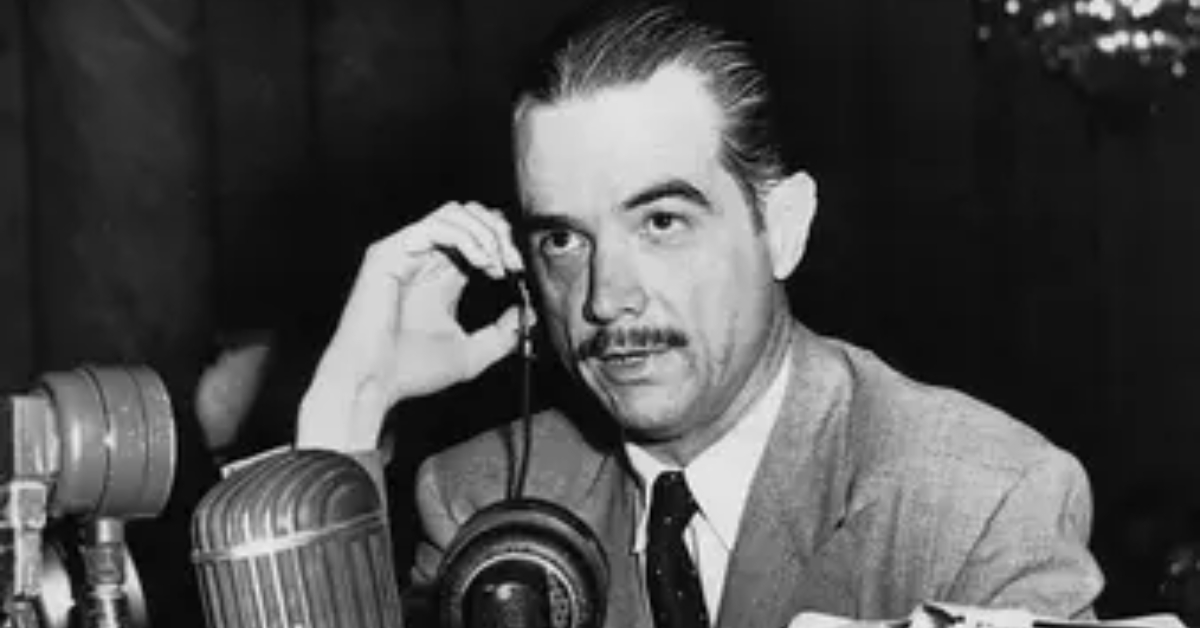
Howard Hughes, born 1905 in Houston, Texas, was a legendary business tycoon, aviator and engineer, and reclusive innovator whose ventures spanned aviation, Hollywood, and real estate. At his death in 1976, his estate was valued at $2.5 billion, equivalent to $11 billion today, making Howard Hughes net worth one of the most remarkable in history.
Hughes controlled Hughes Aircraft Company, Trans World Airlines (TWA), RKO studio, and numerous Las Vegas properties, including the Desert Inn and 25,000 acres Las Vegas. He set world airspeed records, built the H-4 Hercules (Spruce Goose), and left a complex estate battle, ultimately funding the Howard Hughes Medical Institute with a $17 billion endowment.
Howard Hughes Quick Facts
| Category | Details |
| Full Name | Howard Robard Hughes Jr. |
| Born | 1905, Houston, Texas |
| Died | 1976, kidney failure |
| Profession | Business tycoon, aviator and engineer, film director and producer |
| Net Worth at Death | $2.5 billion ($11 billion inflation-adjusted) |
| Major Companies | Hughes Aircraft Company, Trans World Airlines (TWA), Hughes Helicopters Division, Hughes Aerospace Group, Hughes Airwest, RKO studio |
| Major Assets | H-1 Racer, H-4 Hercules (Spruce Goose), Desert Inn, Las Vegas properties (25,000 acres), Culver City property |
| Major Investments | $300 million in Las Vegas, $5.2 billion Hughes Aircraft sale |
| Hollywood Career | Film producer and director, acquired controlling interest in RKO studio |
| Aviation Achievements | Set world airspeed records, advanced aircraft design |
| Real Estate Holdings | Las Vegas hotels and casinos, Culver City property |
| Estate Battle | No valid will, estate split among 22 cousins |
| Medical Legacy | Howard Hughes Medical Institute (HHMI) endowment $17 billion, funds biomedical research |
| Personal Traits | Eccentric, reclusive lifestyle, obsessive-compulsive disorder |
What Was Howard Hughes’ Net Worth?
Howard Hughes’ fortune at the time of his death in 1976 was estimated at $2.5 billion, equivalent to approximately $11 billion today when adjusted for inflation. This staggering wealth stemmed from his diversified investments across aviation, Hollywood, real estate, and hotels and casinos. Key assets included Hughes Aircraft Company, the H-4 Hercules (Spruce Goose), Trans World Airlines (TWA), RKO studio, and more than 25,000 acres Las Vegas, including the Desert Inn.
Hughes’ wealth grew not only from inheritance but also through strategic acquisitions and innovative ventures. His stock ownership in major companies and controlling interest in airlines and studios amplified his fortune inherited, while sales like the $5.2 billion Hughes Aircraft sale and $300 million Las Vegas investments contributed significantly to his net worth. Hughes’ financial empire reflected both his ingenuity as an aviator and engineer and his acumen as a business tycoon.
Estate Battle
Howard Hughes’ death without a valid will triggered one of the most famous estate battles in history. With no legally recognized testament, his massive estate was contested by over 22 relatives, highlighting the complexity of his holdings in Hughes Aircraft Company, Trans World Airlines (TWA), Las Vegas properties, and other ventures.
The estate battle involved disputes over stock ownership, controlling interest, and the division of tangible assets, including Culver City property, Hughes Helicopters Division, and numerous hotels and casinos. Legal teams and distant relatives contested every claim, reflecting the challenges of managing an empire built across multiple industries and assets. The outcome ultimately influenced the dispersal of his wealth, the future of Hughes Aircraft Company, and the endowment of the Howard Hughes Medical Institute (HHMI).
Legacy
Howard Hughes’ legacy extends far beyond his Howard Hughes net worth. As a pioneering aviator and engineer, he set world airspeed records and redefined aircraft design with the Hughes H-1 Racer and H-4 Hercules (Spruce Goose). In Hollywood, he revolutionized film production at RKO studio, influencing generations of filmmakers.
Through the Howard Hughes Medical Institute (HHMI), endowed with $17 billion, Hughes continues to impact biomedical research worldwide. His empire in Las Vegas properties and airline purchases reshaped industries, while his life as a business tycoon and eccentric recluse remains a subject of fascination. Despite struggles with obsessive-compulsive disorder and a reclusive lifestyle leading to kidney failure, Hughes’ innovation, ambition, and strategic vision ensured a lasting influence on aviation, entertainment, science, and finance.
Early Life
Howard Robard Hughes Jr. was born in 1905 in Houston, Texas to a wealthy family involved in the oil industry. From a young age, he displayed remarkable intelligence and a fascination with engineering and mechanics. His father’s fortune provided him with resources to explore his interests freely, laying the groundwork for his later ventures into aviation, film production, and real estate.
Hughes’ upbringing combined privilege with exposure to innovation, fostering an entrepreneurial mindset. He was known for his obsessive attention to detail, a trait that later manifested as obsessive-compulsive disorder. This meticulous nature was instrumental in his early success, whether designing the Hughes H-1 Racer, which broke speed records, or planning ambitious Hollywood productions.
Despite his reclusive tendencies, Hughes’ early experiences in Houston and later education shaped his identity as a business tycoon, aviator and engineer, and visionary investor. Understanding his formative years is essential to appreciating how his eclectic ventures—including Hughes Aircraft Company, Trans World Airlines (TWA), and Las Vegas properties—would come together to build his formidable fortune.
Hollywood Career
Hughes’ immersion into Hollywood began in the late 1920s, where he became a prominent film director and producer. Acquiring RKO studio, he produced films that pushed technological and narrative boundaries. His innovative approach combined meticulous attention to detail with financial acumen, ensuring productions remained commercially viable while artistically ambitious.
Hughes’ Hollywood career was not just about filmmaking; it was a strategic move to consolidate wealth and influence. Through stock ownership and controlling interest in studio operations, he expanded his fortune inherited from his family into a broader entertainment empire. Notable projects included films that set new standards for production quality and cost, reflecting Hughes’ perfectionist tendencies.
While his involvement in Hollywood waned as his interests shifted to aviation and real estate, this period cemented his reputation as an innovative business tycoon capable of navigating multiple industries. His Hollywood experience also provided a platform for later ventures, including investments in hotels and casinos in Las Vegas, such as the Desert Inn.
Aviation
Aviation was central to Hughes’ identity as an aviator and engineer. He set world airspeed records with aircraft like the Hughes H-1 Racer and revolutionized air travel with Hughes Aircraft Company. Hughes’ innovations extended to military and commercial aviation, including developing the Hughes Helicopters Division and expanding Hughes Aerospace Group.
Hughes’ passion for flying was both technical and competitive. He personally piloted prototype aircraft, often testing limits of speed and design. His crowning achievement, the H-4 Hercules (Spruce Goose), symbolized his engineering prowess, combining advanced aerodynamics with ambitious scale. Investments in aviation were both personal and strategic, building the foundation for his $5.2 billion Hughes Aircraft sale. Hughes’ ventures also included commercial airline purchases, enhancing his influence over the aviation industry and generating significant wealth.
Airline Purchases
Hughes’ airline acquisitions transformed commercial aviation. His purchase of Trans World Airlines (TWA) provided him with a controlling interest and strategic influence over routes, fleet expansion, and airline policy. Hughes applied the same meticulous management style from Hollywood and aviation, focusing on operational efficiency and technological innovation.
He also invested in Hughes Airwest, further extending his reach in regional air travel. These acquisitions were not only profit-driven but also reinforced his reputation as a business tycoon with unmatched industry insight. The airline ventures complemented his broader aviation empire, which included Hughes Aircraft Company and the Hughes Helicopters Division, ensuring Hughes’ name remained synonymous with innovation, speed, and strategic investment.
Real Estate
Hughes’ real estate empire was vast and lucrative. In Las Vegas, he acquired over 25,000 acres, including the Desert Inn and other Las Vegas properties, investing $300 million to transform the city’s entertainment landscape. His ownership strategy combined long-term capital growth with operational control, often buying hotels and casinos to maximize revenue streams.
In Culver City, Hughes’ property holdings reflected his interest in combining Hollywood and real estate ventures. These strategic acquisitions strengthened his financial portfolio and provided a base for leveraging influence across industries, from hotels and casinos to aviation. Hughes’ real estate investments were central to his enduring wealth and played a key role in the posthumous estate battle, demonstrating the breadth of his business acumen.
Relationships
Hughes’ personal relationships were as complex as his business empire. Known for an eccentric reclusive lifestyle, he had high-profile relationships with Hollywood stars and business associates. While intensely private, his interactions influenced both his Hollywood career and real estate investments.
Hughes’ family played a role in his wealth management. With no valid will at death, the estate battle divided his holdings among 22 cousins, illustrating the scale of his fortune inherited. His relationships extended to trusted executives and engineers in Hughes Aircraft Company and other ventures, ensuring his meticulous standards were maintained even in his absence. These personal connections shaped his empire, blending trust, obsession, and strategic management.
Later Years and Legacy
Hughes’ later years were marked by extreme seclusion, obsessive-compulsive disorder, and declining health, ultimately leading to kidney failure in 1976. At death, his estate was valued at $2.5 billion ($11 billion inflation-adjusted), sparking a famous estate battle. His holdings included Hughes Aircraft Company, Trans World Airlines (TWA), RKO studio, and extensive Las Vegas properties, influencing generations of business and aviation leaders.
Hughes’ legacy endures through the Howard Hughes Medical Institute (HHMI), endowed with $17 billion for biomedical research. He set world airspeed records, revolutionized aviation, and transformed Hollywood filmmaking, leaving an indelible mark as a business tycoon, aviator and engineer, and pioneering visionary. His life remains a testament to innovation, ambition, and enduring influence across industries.
Conclusion
Howard Hughes remains one of the most fascinating figures in 20th-century history, a business tycoon, aviator and engineer, and innovative Hollywood producer whose influence spanned multiple industries. His Howard Hughes net worth of $2.5 billion at death ($11 billion adjusted for inflation) reflected a lifetime of ambitious ventures in aviation, film, real estate, and airline purchases. From pioneering aircraft like the H-1 Racer and H-4 Hercules (Spruce Goose) to transforming Las Vegas properties and controlling Trans World Airlines (TWA), Hughes’ achievements showcased unmatched vision and meticulous attention to detail.

Ferderik Moller is a passionate blogger with expertise in massages, relationships, and festivals. He shares unique insights, expert tips, and creative ideas to nurture well-being, strengthen bonds, and elevate the joy of celebrations and special moments.