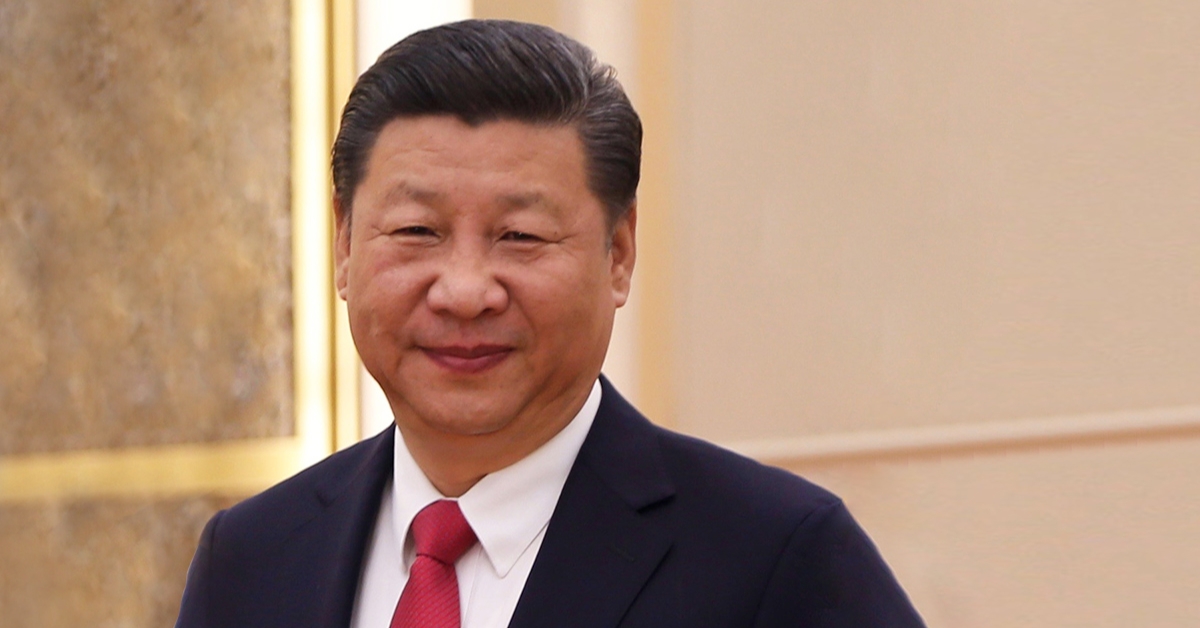
Xi Jinping, the Paramount leader of China, has long been at the center of global political and economic discussions. Serving as the General Secretary of the Chinese Communist Party, President of the People’s Republic of China, and Chairman of the Central Military Commission, Xi holds unmatched influence over domestic and international policies. This article explores Xi Jinping net worth, including his salary, financial background, and wealth accumulation, while also detailing his rise to power, leadership style, and key reforms.
From his early life in Zhengding County to his policies affecting the South China Sea and relations with the United States and neighboring nations, this comprehensive analysis examines both the personal and political dimensions of China’s most powerful contemporary figure.
Bio:
| Fact | Details |
| Full Name | Xi Jinping |
| Date of Birth | June 15, 1953 |
| Place of Birth | Beijing, China |
| Father | Xi Zhongxun – revolutionary leader and former Vice President of China |
| Mother | Qi Xin – party member and educator |
| Spouse | Peng Liyuan – famous Chinese folk singer and public figure |
| Education | Tsinghua University – Chemical Engineering; studied Marxism |
| Political Party | Chinese Communist Party (CCP) |
| Current Positions | General Secretary of the Chinese Communist Party, President of the People’s Republic of China, Chairman of the Central Military Commission |
| Other Political Roles | Member of the Politburo Standing Committee, Vice President of China (2008–2013), Party Secretary of Fujian, Zhejiang, and Shanghai |
| Paramount Leader Status | Yes |
| Official Salary | ~22,000 RMB/month (~3,500 USD/month) |
| Estimated Net Worth | Difficult to confirm; personal assets reportedly low millions USD; influence over state wealth and resources far exceeds personal salary |
| Known Wealth Sources | Official salary, family connections (Xi Zhongxun), access to state resources, indirect influence over state-owned enterprises |
| Key Policies | Anti-corruption campaign, economic reforms, state-owned enterprise restructuring, One-Child Policy adjustments, military modernization |
| Foreign Policy Highlights | Trade war with the United States, strategic partnership with Russia, engagement with North Korea, South Korea, and Japan, Belt and Road Initiative |
| Regions Associated With | Beijing, Hebei, Fujian, Zhejiang, Shanghai, South China Sea operations |
| Languages | Mandarin Chinese |
| Religious/Ideological Views | Communist ideology, Marxism |
| Social Media Presence | Xi Jinping does not have personal social media accounts; official news and CCP accounts (Weibo, Xinhua) serve as proxies |
| Awards/Honors | Multiple state awards for leadership, military contributions, and party service |
| Children | Xi Mingze – daughter, largely private |
| Hobbies/Interests | Traditional Chinese culture, literature, calligraphy, military history |
Xi Jinping’s Salary
Understanding Xi Jinping’s financial standing begins with analyzing his official salary. Like other CCP officials, Xi receives a state-defined annual salary paid in RMB (Chinese currency). However, unlike many Western leaders whose salaries are publicly disclosed in detail, Chinese political remuneration is relatively opaque. Reports indicate that the official salary of the President of the People’s Republic of China is modest, often complemented by allowances and benefits that are standard for high-ranking officials.
- Official salary: Estimated in the range of 20,000–22,000 RMB per month, which equates to roughly 3,000–3,500 USD.
- Allowances and perks: Housing, transportation, security, and other benefits typical for a Paramount leader.
- Comparison with global leaders: While significantly lower than the pay of U.S. or European leaders, Xi’s position allows access to privileges and influence that exceed mere monetary compensation.
This section highlights that Xi’s official salary is not necessarily reflective of his broader wealth or the economic power he wields as the Chairman of the Central Military Commission and head of China’s political apparatus.
What Is Xi Jinping’s Net Worth and Salary?
Estimating Xi Jinping’s net worth is challenging due to the opaque nature of wealth reporting among Chinese politicians. Analysts suggest that while his official salary is modest, his financial influence is far more substantial. Sources point to indirect forms of wealth accumulation, including family connections, investments, and access to state assets.
Key factors include:
- Family wealth: Xi’s father, Xi Zhongxun, was a revolutionary veteran and influential Party secretary, giving Xi exposure to networks of power.
- Business ventures and investments: While Xi himself reportedly does not publicly own private companies, family and associates’ holdings may contribute to perceived wealth accumulation.
- State privileges: Access to government housing, vehicles, and discretionary resources provides additional material advantage beyond his official salary.
Despite the secrecy surrounding exact figures, estimates place Xi Jinping’s net worth in the low millions USD range if considering personal assets alone, though his political influence makes his effective economic power immeasurable.
Early Life and Education
Xi Jinping was born in Beijing, China, in 1953, into a politically prominent family. His father, Xi Zhongxun, played a critical role as a revolutionary leader and Vice President of China, shaping Xi’s early exposure to governance and politics.
Xi experienced both privilege and hardship. During the Cultural Revolution, he was sent to rural Hebei and Zhengding County, where he undertook manual labor, shaping his understanding of rural China and Communist ideology.
Educationally, Xi attended Tsinghua University, earning a degree in chemical engineering while also studying Marxism, which reinforced his ideological foundation. His academic and personal experiences fostered resilience, strategic thinking, and loyalty to the Chinese Communist Party—traits that would later define his ascent to the Politburo Standing Committee and eventually the General Secretary position.
Ascent to Power
Xi Jinping’s rise to the top echelons of the Chinese Communist Party was marked by strategic positioning, steady promotions, and a deep understanding of China’s political structure. After returning from rural Hebei, Xi joined the Communist Youth League and quickly became recognized for his loyalty and political acumen. His early appointments included roles as Party secretary in Fujian and later Zhejiang, where he gained experience managing local governance, economic reforms, and state-owned enterprises.
Key milestones in Xi’s ascent include:
- 1980s–1990s: Local governance in Fujian and Zhejiang, gaining a reputation for competence and anti-corruption measures.
- 2002: Promotion to the Politburo Standing Committee, the top decision-making body of the CCP.
- 2007: Appointment as Vice President of China, increasing visibility on both domestic and international stages.
- 2012: Election as General Secretary of the Chinese Communist Party and Chairman of the Central Military Commission, solidifying his status as Paramount leader.
Xi’s strategic alliances with key CCP officials and reputation for discipline and efficiency helped him consolidate power. His rise was also aided by his lineage, as the son of revolutionary leader Xi Zhongxun, which provided both a network of influence and symbolic legitimacy.
Leader of China
As the President of the People’s Republic of China and Paramount leader, Xi Jinping has reshaped China’s political landscape. Domestically, he has emphasized centralization of power, the importance of Party discipline, and strengthening the CCP’s ideological control over society.
Key aspects of his leadership include:
- Anti-corruption campaign: Launched to target corruption among CCP officials, consolidating Xi’s authority while increasing public trust in the Party.
- Political purges: Removal of rivals from the Central Secretariat and other leadership bodies, strengthening centralized decision-making.
- Policy enforcement: Emphasis on civil liberties, censorship, and mass surveillance to maintain social stability.
- Term limits: Xi successfully removed presidential term limits, extending his potential tenure beyond traditional constraints.
Xi’s leadership style combines authoritarian governance with a focus on national pride, economic development, and global influence. His consolidation of power ensures that both domestic and international strategies reflect his personal vision for China’s future.
Foreign Policy
Xi Jinping has actively shaped China’s position on the global stage, balancing assertive diplomacy with economic initiatives. His foreign policy is guided by national interests, regional security, and global influence.
Key elements include:
| Region/Partner | Key Policy or Interaction |
| United States | Trade negotiations, including tensions during the Donald Trump era trade war. |
| North Korea | Diplomatic engagement to stabilize regional security. |
| Russia | Strategic partnership and military cooperation. |
| South Korea | Economic and security collaborations, particularly regarding the South China Sea. |
| Japan | Trade and security diplomacy amidst historical and territorial sensitivities. |
Xi has leveraged initiatives like the Belt and Road Initiative to enhance China’s global economic influence. At the same time, military modernization and assertiveness in the South China Sea reflect a balance of diplomacy and strategic defense. His foreign policy approach combines pragmatic engagement with a firm assertion of China’s sovereignty and regional leadership.
Reforms
Xi Jinping has pursued a range of economic reforms and policy changes to modernize China’s economy and governance structures.
Key reforms include:
- State-owned enterprises: Restructuring and improving efficiency to enhance global competitiveness.
- Market competition: Encouraging private sector growth while maintaining Party oversight.
- People’s Liberation Army modernization: Strengthening military capabilities alongside technological advancements.
- Social policies: Gradual adjustments to policies like the one-child policy, reflecting demographic and economic considerations.
These reforms demonstrate a combination of pragmatic governance with ideological fidelity, maintaining Party control while fostering economic growth. Xi’s approach balances modernization with continuity, reflecting his broader vision of a strong, centralized, and globally influential China.
Personal Life
Xi Jinping’s personal background provides insight into his values and leadership style.
- Family: Son of revolutionary leader Xi Zhongxun, married to singer Peng Liyuan.
- Education: Graduated from Tsinghua University in chemical engineering and studied Marxism.
- Residences: Has lived in various regions, including Beijing, Fujian, Zhejiang, and Shanghai.
- Interests: Promotes traditional Chinese culture, military history, and literature.
His personal life is closely intertwined with his political image. The prominence of his wife, Peng Liyuan, in Chinese culture, and his lineage provide additional legitimacy and influence. Despite limited public disclosures, Xi maintains a careful balance between private life and the demands of being China’s most powerful leader.
Conclusion
Xi Jinping’s journey from his early life in Zhengding County to becoming China’s Paramount leader illustrates a combination of strategic political maneuvering, ideological commitment, and disciplined governance. While his official salary as President of the People’s Republic of China and General Secretary is modest, his effective influence over the economy, military, and Party apparatus contributes to his significant wealth accumulation and access to resources. Beyond financial considerations, Xi’s leadership has reshaped China’s domestic policies through anti-corruption campaigns, state-owned enterprise reforms, and strengthened Party discipline, while projecting influence globally via a proactive foreign policy with nations like the United States, Russia, and South Korea. Ultimately, understanding Xi Jinping net worth requires looking beyond personal finances to consider the broader power and authority that define his role.

Ferderik Moller is a passionate blogger with expertise in massages, relationships, and festivals. He shares unique insights, expert tips, and creative ideas to nurture well-being, strengthen bonds, and elevate the joy of celebrations and special moments.