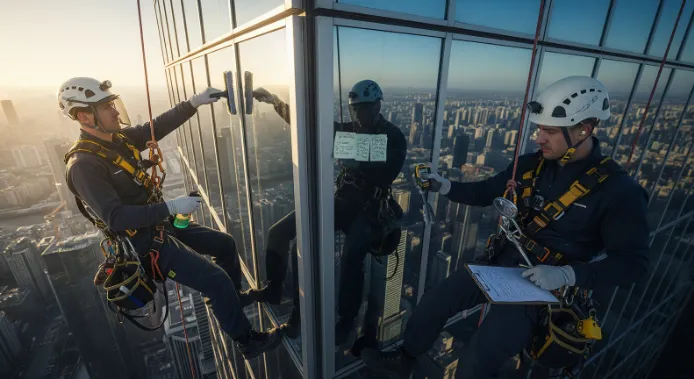
Rope access services improve efficiency by sharply cutting the time and labor needed for setup and dismantling, allowing technicians to reach high or hard-to-reach areas in minutes instead of days. At the same time, these services reduce risk by using highly trained professionals who rely on dual-rope backup systems and follow the toughest safety certifications in the world, such as IRATA and SPRAT. By removing the need for heavy machinery and large scaffolding, companies can keep a clean, organized job site that focuses on both speed and worker safety.
For modern industrial and commercial projects, choosing specialized Access Services is no longer a niche option; it is a smart, strategic choice. Whether the work involves high-rise window cleaning, structural inspections, or tricky repairs on offshore rigs, rope access offers a level of flexibility and responsiveness that traditional methods cannot match. This approach helps projects stay on schedule and within budget while keeping an excellent safety record.
What Are Rope Access Services?
Rope access is a technical method that uses specialized climbing equipment-including high-strength ropes, harnesses, and mechanical devices-to let technicians work in areas that are otherwise hard or impossible to reach. Unlike basic rappelling used in recreational climbing, industrial rope access is a professional trade with strict international rules. It began as a way to maintain huge structures like oil rigs and skyscrapers where conventional platforms were either too expensive or simply could not be used.
Today, rope access technicians are much more than climbers; they are skilled tradespeople who carry out complex tasks while suspended. They handle work such as welding, pipefitting, non-destructive testing, and facade repair and cleaning. These professionals bring their tools and training to great heights. The method is known for its flexibility, allowing many types of industrial, commercial, and heritage-building maintenance jobs to be done accurately and safely.
How Rope Access Methods Work
The main principle of rope access is redundancy. Every technician is supported by two separate ropes: a primary working rope and a backup rope. This “two-point” system means that if the main rope ever fails, the secondary line immediately stops any fall. These ropes are fixed to secure anchor points on the structure, which are carefully tested and certified to hold high loads, keeping the technician safe during the work.
Technicians use several mechanical devices, such as ascenders and descenders, to move up and down smoothly. These tools allow precise, controlled movement so a worker can position themselves exactly where they need to be for a repair or inspection. Combined with full-body harnesses and special lanyards, the system creates a stable working position in mid-air, letting the technician focus fully on the job instead of worrying about wobbling ladders or swaying lifts.
Key Benefits Compared to Traditional Access Methods
When choosing how to reach high areas, the comparison between rope access and traditional methods often exposes a huge difference in logistics. Traditional methods often involve heavy equipment, many permits, and large work zones. Rope access, on the other hand, is light and flexible. It uses far fewer resources to get the same—or better—results, which makes it a popular choice for facilities that want to lower their operating costs, especially when working with experienced teams like https://novaconstructionservices.com/.
Rope access is also far less disruptive. While a crane or scaffolding might block sidewalks, limit views, or close a parking lot for weeks, a rope access crew can often finish the work with almost no impact on the surroundings. This almost “invisible” style of working is especially helpful in busy cities or active industrial plants where keeping normal operations running is a key goal.
Rope Access vs. Scaffolding
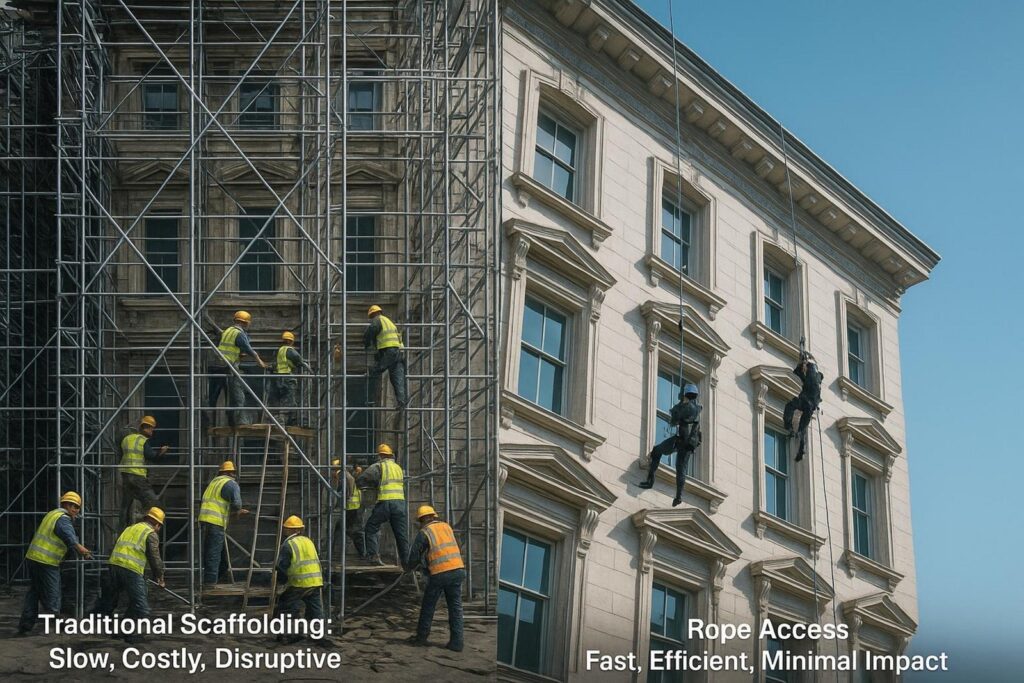
Scaffolding takes a long time to put up and take down-often days or even weeks. It involves moving and assembling tons of metal tubes and boards, which creates major logistics challenges and raises the risk of lifting and handling injuries. Rope access removes these problems entirely; a team can usually set up their ropes and start work within a few hours, cutting the project timeline and reducing the total hours spent on site.
Scaffolding can also create physical risks for the structure itself. Heavy frames can scratch or damage delicate facades, and the overall weight of the system can be a problem for some roofs or older buildings. Rope access technicians leave almost no mark. Because the gear is lightweight and touches the building only in small areas, there is very little chance of structural or visual damage during the work.
Rope Access vs. Elevated Platforms and Lifts
Elevated work platforms, including cherry pickers and scissor lifts, are limited by ground conditions and reach. They need flat, stable ground to operate and are restricted by their maximum height and sideways reach. Rope access technicians do not have these limits; they can climb hundreds of feet up or drop down into deep shafts without needing support from below. This makes them ideal for very tall structures like smokestacks, towers, and bridge cables.
Mechanical lifts can also break down and need fuel or electricity, which increases both costs and environmental impact. Rope access is a human-powered, low-impact option. It lets technicians get much closer to the surface they are working on, allowing detailed, close-up inspections and repairs that might not be possible from the basket of a distant lift.
How Rope Access Improves Efficiency
Efficiency in construction and maintenance means finishing a job correctly with as little wasted time and money as possible. Rope access stands out here because it avoids the common delays that come with heavy gear. Without waiting for crane deliveries or scaffolding permits, the whole project moves faster. This smoother process lets companies deal with urgent repairs right away, stopping small problems from turning into serious structural issues.
Rope access is also efficient because of the advanced skills of the technicians. Since they manage their own means of access, there is no need to bring in separate teams for rigging and for the trade work. One multi-skilled crew can handle everything-from reaching the work area to completing the specialist repair. This makes planning easier and keeps communication clear.
Faster Setup and Project Completion
One of the biggest advantages of rope access is how quickly teams can get started. Technicians carry their gear in compact bags, so they can move through a site without large gates or freight elevators. Once at the anchor locations, setting up the ropes is a simple, routine process for trained professionals. This fast setup means the productive part of the workday starts almost right away instead of being lost to long equipment preparation.
This speed leads directly to quicker project completion. Jobs that might take a week with traditional methods can often be done in a day or two by a rope access crew. For businesses, that means less downtime and a faster return to normal operations, which is especially important in power plants, manufacturing sites, and other facilities where every hour offline costs money.
Cost Savings Over Scaffolding and Cranes
Rope access offers major cost savings. By removing the rental costs of scaffolding materials and the high daily rates of cranes, companies can cut thousands of dollars from a single project. Real examples from industrial sites show that switching to rope access can save more than $500,000 in just one quarter by lowering labor and equipment costs. Those savings can then support other important maintenance work.
Rope access also needs fewer workers to get the same job done, so labor costs per hour of work are much lower. You are not paying a crew of ten people to build a structure so that two people can perform the task. Instead, you pay only for the specialists who can do the access and the work itself. This lean staffing model makes rope access one of the most cost-effective options for work at height today.
Improved Flexibility for Complex or Confined Spaces
Many modern buildings have unusual shapes, curved glass, or recessed features that straight platforms and rigid scaffolding cannot reach. Rope access technicians can move across these tricky surfaces using methods like aid climbing and tensioned lines. This flexibility means every part of a structure can be checked and maintained, no matter how unusual the design.
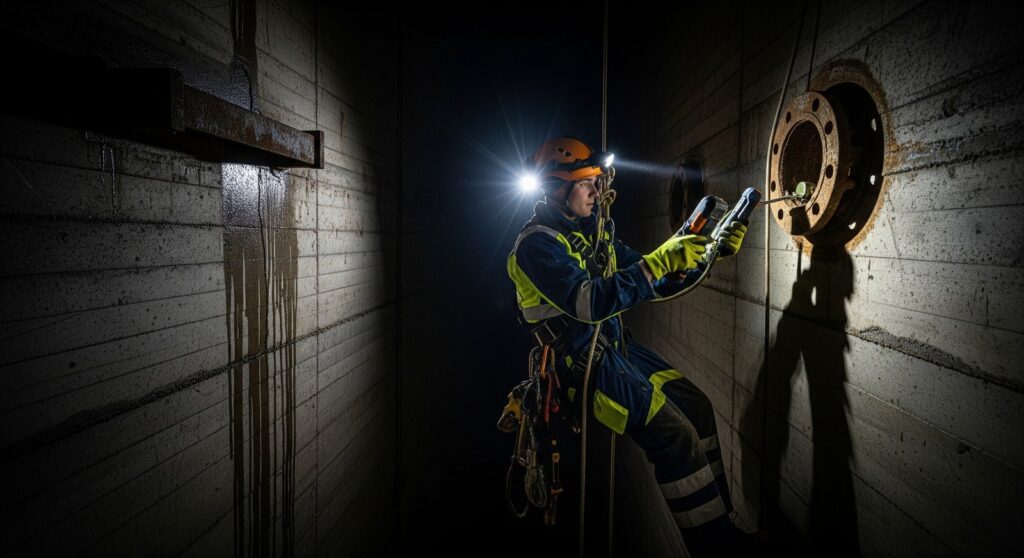
This same flexibility applies to confined spaces such as storage tanks, mine shafts, and internal pipe systems. In these tight areas, where bigger machines cannot fit, rope access technicians can safely descend and carry out inspections or rescue operations. Their ability to move through cramped, restricted zones makes them a key resource for maintenance in oil, gas, mining, and similar industries.
Reduced Disruption to Operations
Keeping daily operations running is a main concern for facility managers. Scaffolding can block doors, emergency routes, and loading bays, forcing changes to normal routines. Rope access has a very small footprint on site, often needing only a small, marked-off area on the ground below where the technicians are working. People can still walk by safely, and operations can continue with little or no change.
In industrial plants, rope access teams can often work at the same time as other ongoing tasks. Because they do not rely on loud, vibrating, fuel-burning machines, they are far less likely to disturb sensitive equipment or nearby staff. This low-impact style of work is especially useful at facilities that run around the clock and cannot stop production for maintenance.
How Rope Access Reduces Risk
Working at height always carries some danger, but rope access has built a record as one of the safest options in the industry. This is the result of careful planning, not luck. The field is based on a strong safety culture that focuses on strict training, regular gear checks, and detailed planning. Statistics show that rope access has a far lower incident rate than traditional methods like ladders and scaffolding, largely because it avoids many of the weak points common in those systems.
Rope access reduces risk in part because the method is simple and has fewer mechanical parts. With less heavy equipment involved, there are fewer potential failures. By relying on well-trained people and certified gear, rope access teams turn high-risk situations into controlled, well-organized operations. Every step is planned, every anchor is checked, and every technician is ready to deal with unexpected events.
Strict Safety Standards and Certifications
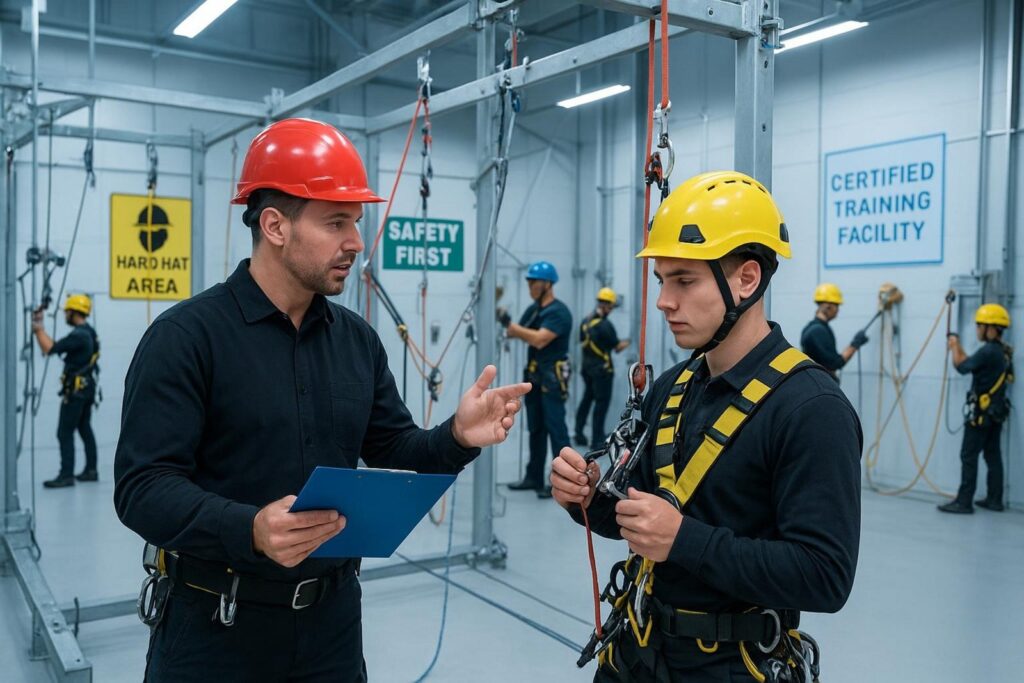
The rope access industry operates under global organizations such as the Industrial Rope Access Trade Association (IRATA) and the Society of Professional Rope Access Technicians (SPRAT). To start working as a Level I technician, a person must complete 40 hours of intensive training and pass an independent assessment. That is only the first step; moving up to Level II or Level III requires hundreds or even thousands of logged hours, plus extra training in rigging and rescue techniques.
These certifications cover much more than climbing skills. They include risk planning, gear care, and emergency procedures. A Level III supervisor, who must be present on every job site, is an expert in safety rules and takes full responsibility for the crew’s safety. This clear structure means that every project has oversight from someone with years of focused experience in working safely at height.
Lower Exposure to Working at Height Hazards
Traditional methods often create their own dangers. Scaffolding can fail if it is not built correctly, and objects can fall from open platforms. Rope access technicians prevent such “dropped object” incidents by using tool lanyards that keep every piece of equipment attached to them. The dual-rope system also provides much better fall protection than a single lifeline used on a ladder or simple roof system.
Without the need for heavy machinery, rope access also cuts the risk of collisions, tip-overs, or mechanical failures at ground level. The light nature of the equipment reduces the overall energy and movement on site, which naturally makes the area safer for everyone. Removing heavy steel and hydraulic systems removes many of the main causes of large industrial accidents.
Fewer People and Less Equipment On Site
A crowded work zone is more likely to have accidents. The more people and machines moving around, the greater the chance something goes wrong. Rope access reduces the number of people on site to only those who are truly needed. A standard rope access team might have just three or four focused workers instead of a large group building and using scaffolding. With fewer people in the area, it is easier to maintain awareness and clear communication.
Less equipment also means fewer tripping hazards and less clutter. In rope access, nearly all the tools required are carried by the technician or organized at a small rigging point. This neat, ordered way of working is a key feature of the trade and plays a big part in its strong safety performance.
Active Safety Planning and Incident Prevention
Before any ropes are set up, the team completes a detailed, site-specific risk assessment. Experienced technicians inspect the structure to find secure anchor points, check possible weather effects, and plan clear rescue routes. This early planning means that all important factors are considered before work starts. If a safe anchor cannot be found or a rescue method cannot be set, a responsible rope access company will refuse the job and place safety above convenience.
Each project also includes a written “method statement” that explains how the work will be done and what safety measures are in place. Because of this forward planning, the team is rarely surprised by problems; they have usually been predicted and planned for. This level of readiness allows rope access providers to take on difficult high-level jobs with strong confidence.
Frequently Asked Questions About Rope Access Efficiency and Safety
Is Rope Access Safer Than Other Methods?
Yes. Statistics show that rope access is one of the safest ways to work at height. Data from groups such as IRATA consistently shows fewer reportable incidents per 100,000 working hours when compared with many traditional construction and maintenance methods. This safety record is linked to the required dual-rope systems, advanced technician training, and the rule that a Level III supervisor must be present on every site.
The safety of rope access is also supported by strict equipment rules. Every item, from carabiners to ropes, must meet international safety standards and go through regular, documented checks. While any work at height carries some risk, the strong safety culture and strict controls within rope access make it one of the lowest-risk options for modern infrastructure projects.
Future Innovations and Sustainability in Rope Access
Looking ahead, rope access is set to become even more efficient through new technology. Tools such as heavy-lift drones are starting to help with the first placement of lines over hard-to-reach structures, and augmented reality (AR) headsets are being tested to give technicians live structural data and drawings while they work. These tools will cut down the time spent figuring out site conditions and help deliver even more accurate inspections and repairs.
Sustainability is also driving the growth of rope access. As companies face growing pressure to cut their carbon emissions, the human-powered, low-resource nature of rope access becomes very attractive. Unlike cranes that use large amounts of energy or scaffolding that needs extensive transport, rope access relies on light gear and skilled workers. This makes it one of the most environmentally friendly choices for working at height, helping organizations meet sustainability goals while still caring properly for buildings and industrial assets.

Ferderik Moller is a passionate blogger with expertise in massages, relationships, and festivals. He shares unique insights, expert tips, and creative ideas to nurture well-being, strengthen bonds, and elevate the joy of celebrations and special moments.