Construction decisions carry weight. A material substitution can shift thousands of dollars. A layout revision might affect weeks of labor. Owners, contractors, and consultants all want confidence when approving budgets, yet that confidence often rests on incomplete information.
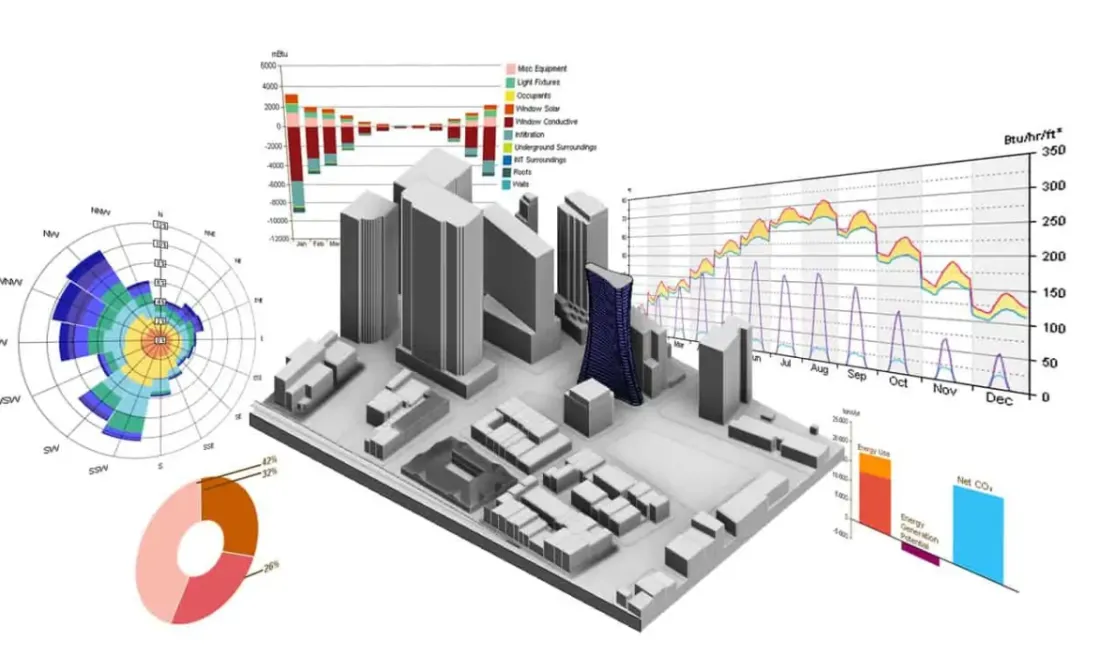
True confidence doesn’t come from adding contingency. It comes from visibility. When teams understand exactly what is being built — and how much of it — cost decisions stop feeling like educated guesses. This is where a model-driven approach becomes powerful. By combining accurate quantity data from BIM Modeling Services with the judgment of experienced Construction Estimating Services, teams gain a clearer view of both scope and cost. When structured reporting is needed, Xactimate Estimating Services provides added transparency.
A measurable foundation for better decisions
At its center, Building Information Modeling provides something traditional drawings may never have wanted: measurable facts embedded within the design itself. Every wall, slab, door, and pipe exists now not just as a line on paper, but as a quantifiable object.
Effective BIM Modeling Services focus on:
- Consistent naming of elements across disciplines
- Inclusion of key attributes such as material and finish
- Organization by trade to align with the estimating logic
- Reliable export formats that preserve units and counts
When these fundamentals are in place, the model becomes more than a coordination tool. It becomes the backbone of cost planning. Decision-makers no longer rely on rough extrapolations. They work with real quantities.
Early involvement reduces financial uncertainty.
Confidence grows when uncertainty shrinks early in the process. One of the most practical benefits of linking BIM with cost planning is the ability to estimate earlier — and refine often.
With measured quantities available during schematic and design development stages, Construction Estimating Services can:
- Identify cost drivers before they are locked in
- Compare design alternatives side by side
- Highlight elements with high volatility
- Advice on constructability implications that affect labor
Instead of waiting until drawings are “complete,” teams can test options in real time. That proactive approach reduces late-stage surprises and strengthens trust among stakeholders.
Connecting design changes directly to cost impact
Design evolution is natural. What matters is how quickly its financial impact becomes clear.
A well-structured model allows even small changes to be tracked precisely. If a wall thickness increases or a finish shifts from tile to stone, those modifications alter measurable quantities. When BIM Modeling Services maintain structured, consistent models, those deltas are easy to extract.
Estimators then translate the change into cost using reliable inputs. The process is smoother when a predefined mapping connects model elements to pricing codes. Instead of recalculating from scratch, estimators update affected lines. This structured flow builds confidence because stakeholders see exactly how and why numbers move.
Transparency strengthens stakeholders trust
Confidence in cost decisions is not just about internal accuracy. It’s also about communication. Owners, lenders, and partners want to understand the reasoning behind figures.
This is where Xactimate Estimating Services can enhance credibility. By presenting costs in a standardized, recognizable format, they make budgets easier to review and approve.
Structured outputs offer:
- Detailed labor, material, and equipment breakdowns
- Regionally adjusted pricing references
- Clear traceability between scope and cost
- Documentation suitable for audits or insurance reviews
When stakeholders see organized, consistent data, approval cycles shorten. Discussions become practical instead of defensive.
A practical framework for confident decision-making
Confidence doesn’t come from software alone. It comes from a repeatable process.
A straightforward framework might look like this:
- Establish modeling standards at project kickoff.
- Have BIM provide milestone exports.
- Maintain a shared mapping file linking model elements to cost codes.
- Engage Construction Estimating Services to apply productivity and market rates.
- Use Xactimate where formal reporting is required.
- Validate findings with procurement and field leadership.
Repeat the cycle with each major design update. Over time, the rhythm becomes predictable — and so do the cost outcomes.
Reducing risk through coordination
Clashes and scope gaps often create unexpected expenses. When disciplines work in isolation, inconsistencies slip through unnoticed. A coordinated model reveals those issues early.
Coordinated BIM workflows help teams:
- Avoid duplicate quantities between trades
- Detect spatial conflicts before fabrication.n
- Clarify responsibility boundaries
- Ensure that specifications match modeled elements.
These preventive steps strengthen confidence because they reduce the likelihood of reactive spending later.
The human factor remains essenti..al
No tool replaces experience. Even the most accurate model cannot account for every site condition or market fluctuation. Skilled professionals interpret the data and apply context.
Construction estimatingincorporates local labor realities and sequencing strategies. Project managers assess scheduling impacts. Procurement teams evaluate supplier availability. Xactimate Estimating Services adds clarity where standardized reporting is beneficial.
The blend of data and expertise is what ultimately drives confident decision-making.
Small habits that produce steady confidence
Consistency matters. Teams that maintain a few disciplined habits tend to see stronger financial outcomes.
Helpful practices include:
- Distributing a concise modeling guide at kickoff
- Locking standard families to prevent naming drift
- Conducting early export tests to verify units
- Version-controlling the model-to-cost mapping file
These measures may seem minor, yet they significantly reduce confusion and rework.
Real-world results teams notice quickly
When BIM-supported estimating becomes routine, certain improvements stand out:
- Faster turnaround on revised budgets
- Fewer emergency procurement adjustments
- Clearer justification for change orders
- Smoother conversations between design and construction teams
Over time, these improvements build a culture of reliability. Confidence becomes the norm rather than the exception.
Conclusion: confidence through alignment
Confidence in production fee decisions is earned through alignment. Alignment between layout intent and measurable records. Alignment among quantities and pricing requires good judgment. Alignment among reporting and stakeholder expectancies.
By integrating BIM Modeling Services, disciplined Construction Estimating Services, and structured Xactimate Estimating Services when appropriate, project groups remodel uncertainty into knowledgeable judgment. Decisions turn out to be grounded in evidence, not assumptions.
In a discipline in which margins are tight and expectations are excessive, that sort of self-belief makes all the difference.
FAQs
1. When ought BIM-based estimating start on a mission?
Ideally, at some point in early design ranges, once geometry is stable and modeling requirements are defined. Early integration enables perceiving fee drivers earlier than they become hard to change.
2. Are Xactimate reports vital for each creation undertaking?
No. They are most useful when formal documentation or standardized evaluation is needed, such as for insurers, public owners, or distinctive audits.
3. What is the first step to improve confidence in price selections?
Establish clear modeling standards and create a shared mapping document among model factors and value codes at the undertaking kickoff. This ensures consistency from the start.

Ferderik Moller is a passionate blogger with expertise in massages, relationships, and festivals. He shares unique insights, expert tips, and creative ideas to nurture well-being, strengthen bonds, and elevate the joy of celebrations and special moments.