Water in a property that isn’t extracted quickly doesn’t just evaporate. It moves. It soaks into floors, seeps into walls, saturates insulation, and creates the damp conditions that trigger structural decay and mould growth. The longer it sits, the more expensive and complex the remediation becomes. Fast-acting water extraction services are the first line of defence in stopping minor water events from becoming major structural problems.
What Happens to Your Property When Water Isn’t Removed Fast?
Water migrates by capillary action through concrete, timber, and masonry. It wicks upward through walls and outward through floors faster than most people expect. Within 24 hours, drywall softens and begins to lose structural integrity. Within 48 hours, mould spores already present in the environment find the moisture they need and begin germinating. Within a week, timber framing can begin to show early stages of rot in warm Australian conditions.
What Equipment Do Water Extraction Professionals Use?
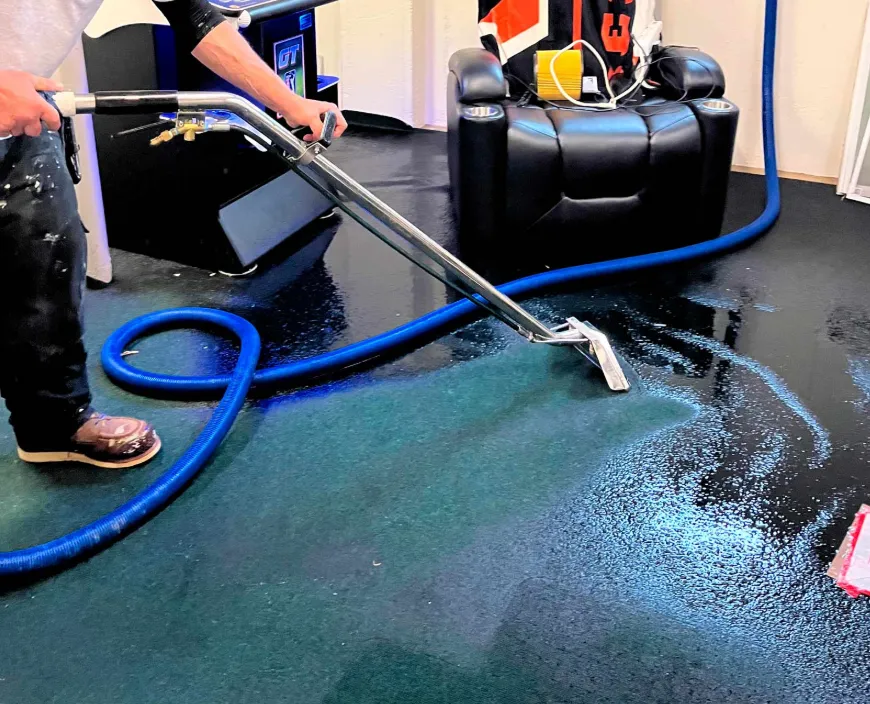
Truck-mounted or portable extraction units capable of removing hundreds of litres per hour. Submersible pumps for deep standing water. Wet vacuums for residual moisture after pumping. Thermal imaging cameras to locate moisture trapped in structural cavities. Moisture meters to measure exact water content in materials and track drying progress. Industrial dehumidifiers rated for continuous 24-hour operation. This equipment doesn’t have consumer equivalents.
What Is the Difference Between Water Removal and Water Extraction?
Water removal gets the visible water off the surface. Extraction goes deeper, pulling moisture from carpet fibres, underlay, concrete slabs, and the air itself. Removal is the first step. Extraction is the process that continues for days afterward using dehumidifiers and air movers working together to bring all materials back to safe moisture levels. Stopping at removal leaves the building wet below the surface.
How Do Professionals Know When a Property Is Truly Dry?
Moisture meters measure the percentage of water by weight in wood, concrete, and other materials. A dry piece of structural timber typically reads below 19% moisture content. A drying timber reads higher. Professionals set target moisture levels and monitor readings daily until all materials reach those targets. The IICRC S500 standard, used by professional restorers globally, defines specific drying goals for different material types. Guesswork isn’t part of the process.
Can Water Extraction Save Hardwood Floors?
In many cases, yes. Hardwood floors that cup or buckle after flooding aren’t always destroyed. If extraction and drying begin within 24 to 48 hours, the wood fibres can return to normal dimensions as they dry. After 72 hours, the cell walls begin to break down and permanent distortion becomes likely. The key is speed and using the right combination of extraction and controlled drying rather than aggressive heat, which causes cracking.
What Are the Long-Term Consequences of Skipping Professional Extraction?
Chronic dampness in walls and floors creates permanent mould colonies that affect indoor air quality for years. Wood rot weakens structural elements, requiring expensive repairs that go far beyond the original water event. Concrete cancer develops when reinforcing steel corrodes due to sustained moisture exposure. Electrical systems in wet cavities become fire hazards. The total repair cost of ignored water damage typically runs five to ten times the cost of immediate professional extraction.
Does Insurance Cover Water Extraction Services?
Sudden water damage from burst pipes or appliance failures is generally covered under standard Australian home insurance. Gradual leaks that were left unaddressed may be excluded on the basis that the damage was preventable. Extraction services are typically claimable as part of the restoration process. Keep all invoices, take photographs of all affected areas before and during extraction, and notify your insurer within 24 to 48 hours of the event.

Ferderik Moller is a passionate blogger with expertise in massages, relationships, and festivals. He shares unique insights, expert tips, and creative ideas to nurture well-being, strengthen bonds, and elevate the joy of celebrations and special moments.