¿Dónde estamos nosotros (Where are we?) Are we in the era of 5G, or is it still 4G but with improved performance? Personally, I think we are still in the 4G era because 5G has yet to reach the masses in a meaningful way.
Well, you may or may not agree with me here, but if you are a 1990s kid, you’ll certainly agree that we have come a long way. Back then, static webpages were pretty much well-handled by 3G internet. Today, high-definition websites that are loaded with features can be achieved via high-speed 4G internet. Pretty amazing, right?
Anyway, how did we achieve all of that? What was the process? Let us take a deeper look at the evolution of the mobile internet, and dig a little deeper to find out facts that most of you don’t even know. Sounds great? Yes? Let’s jump right into it.
1G: Where It All Started
This is the point where everything began. If you talk about the core of the foundation, it dates back to the 1940s when, for the very first time, mobile technology was used. It didn’t have a name of its own back then, but it is today referred to as 1G.
Sin embargo (Having said that), the technology wasn’t available to the masses until the 1980s, and even then, it wasn’t very reliable. Signals could easily be intercepted, which meant strangers could listen to your calls. It wasn’t good, but it was a step ahead. I mean, people didn’t have to travel miles to convey a message, as they could do it using a sender and a receiver that was powered by radio technology to transmit signals from point Y to point Z (yeah, I prefer Y and Z to A and B).
In the USA, the first mobile technology was known as the Advanced Mobile Phone System (AMPS), and in Europe, it was the Nordic Mobile Telephone (NMT). Both of them used analog signals to communicate, which weren’t reliable, but they laid the foundation of what was to come.
2G: We Communicated via Digital Means
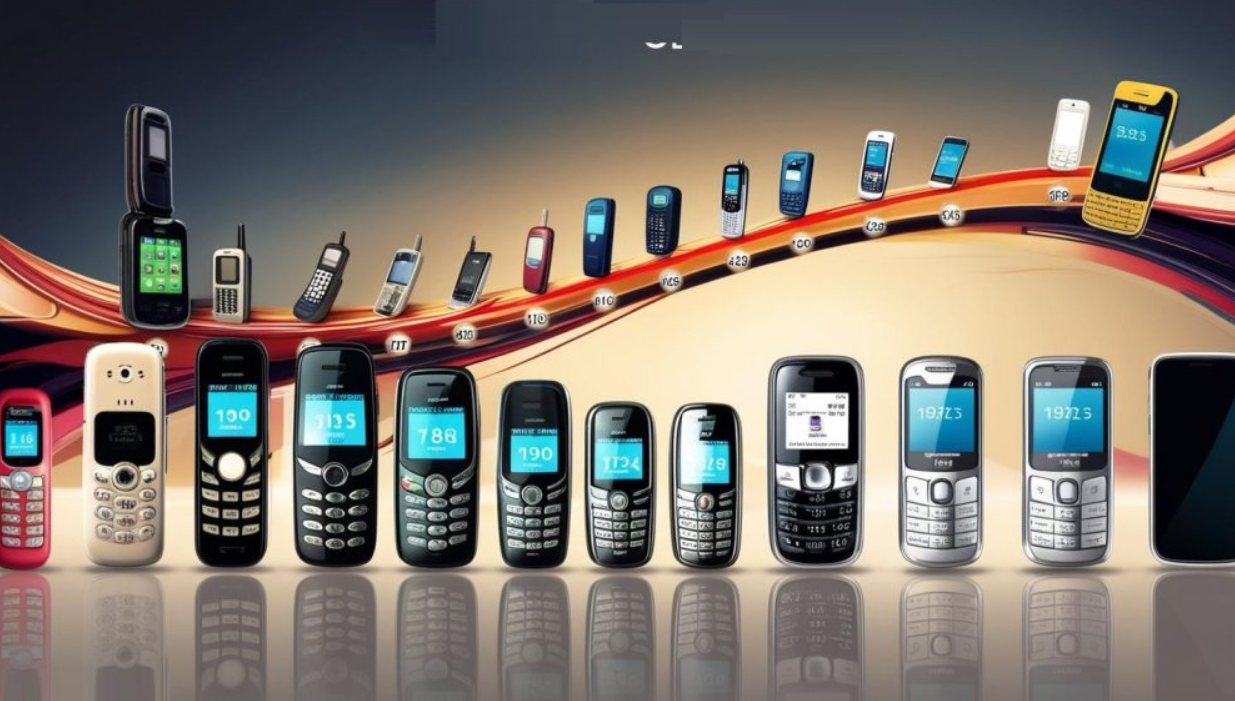
2G was the era where mobile technology got its first breakthrough. People flooded the stores, and demand surged as it was a huge improvement over the 1G.
As I said earlier, the first iteration of mobile technology was analog, and it was easy for people in authority to eavesdrop on you. But not the 2G – it was the first ever digital mobile technology that used digital signals to deliver a message from point X to point Z.
It was so convenient and reliable, and it introduced features like SMS (Short Message Service). We can’t live without WhatsApp or Gmail today, that is true, but the OG of these new apps was SMS. It basically enabled mobile users to send a text message. It was more convenient than calling someone who doesn’t even want to talk to you.
Companies like Motorola, Nokia, and Toshiba were the early birds to utilize the 2G technology, and they really reaped the great benefits that came with it. Anyway, since it was so good, tech giants started working on the betterment of the 2G, and invented the 3rd generation of the mobile networks – 3G.
| ¿Sabes? (did you know that) the first ever cellphone weighed 2.4 pounds? It was the Motorola DynaTAC 8000X, which needed 10 hours of charging to operate for merely half an hour. We’ve truly come a long way since then. |
3G: Mobile Phones Got Connected to the Internet
Well, these were the times when mobile internet was introduced to the masses. Previously, only the military had access to mobile internet, but with the 3rd iteration, the masses got their hands on the technology.
Let’s go back to the 2nd generation: it can only carry your voice or text, right? There was nothing like multimedia, or video calling. With 3G, it all changed, and gave birth to the modern-day smartphones like the iPhone and Samsung Galaxy S.
3G made it possible to connect to the internet, read blogs, view pictures, send videos, and more, right from your phone. That was the very first time when we had front front-facing camera for video calls. It was like talking to the person who was right in front of you. But the problem with that it wasn’t very clear – the videos looked blurry, voices were getting interrupted, and sometimes it didn’t even connect.
Something needed to be fixed, and that happened in the 4th stage.
4G: Mobile Networks Got Steroid-ed
The next iteration of mobile networks felt like it was running on steroids. It was a big leap forward in terms of speed, reliability, and overall features of the mobile network.
It was fully functional by 2010, and it gave birth to multiple new mobile phone experiences, i.e. apps. It was the same time when Facebook was invented, and people jumped on it. Apps like Amazon and WhatsApp also became popular at the same time because the 4G mobile networks made it possible.
It was the time of maturation for mobile technology, and I am grateful for that time.
5G: Everything Turns Digital
At this point, if you multiply the speeds of 4G networks by at least 5, you get 5G.
The problem with 4G was that while it could transmit signals to far-off areas, its bandwidth wasn’t that big. Then the millimeter waves (mmWaves) were used to transmit the signals. Those waves could carry more than that, and were more reliable, but at a pretty limited distance.
This iteration of the mobile network is still a work in progress, but from what I can imagine, it already promises new possibilities for the masses, like AR/VR, Metaverse, and more.
¿Cuándo sucederá eso? Solo el tiempo lo dirá. (When will that happen? Only time will tell).
Can Mobile Networks Still Compete with Wired Networks?
A question always lingers in my mind: all of the evolving mobile technology is great, but does that compete with the well-oiled wired networks we have today? Well, I don’t think so.
Let me explain that with the help of an example:
I have Cox Internet at home, which was recommended by my Latina girlfriend. I reached out to Cox servicio al cliente to get my internet connection.
Now, when I compare it to the 5G network I have on my Pixel 10, Cox just beats it. When I am connected to my home WiFi from Cox, I get around 1 Gig of consistent download speed. On the other hand, the 5G network maxes out at 250Mbps.
In simple words, wired connections are still faster than mobile networks. They are not mobile, but they work better.

Ferderik Moller is a passionate blogger with expertise in massages, relationships, and festivals. He shares unique insights, expert tips, and creative ideas to nurture well-being, strengthen bonds, and elevate the joy of celebrations and special moments.