
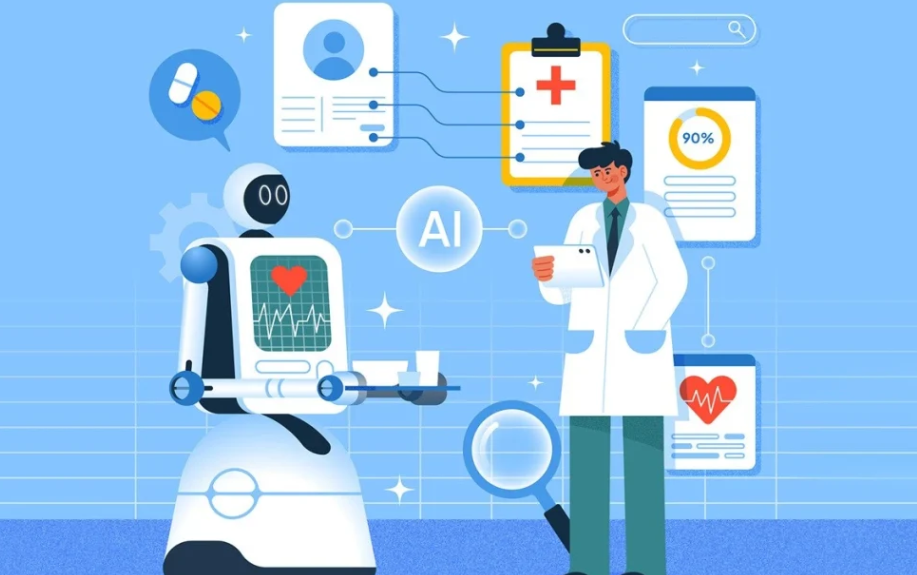
The world of healthcare is being dramatically reshaped by technology, led by artificial intelligence (AI) and machine learning. Among the most transformative are Healthcare-Specific LLMs, large language models adapted for the medical domain. These models may potentially improve the way clinicians work, research is interpreted, and patients are cared for in unimaginable ways. A particularly interesting use-case is in oncology – the field of medicine concerned with the diagnosis, treatment and research of cancer. In this deep dive, we uncover how oncology use-cases are benefitting from specialized healthcare language models and why industry leaders and clinicians are turning to these solutions as indispensable partners in the battle against cancer.
Enhancing Cancer Care Documentation and Patient Summarization
Clinical documentation is complicated in oncology. Oncologists need to read pathology reports, imaging studies, treatment plans, and follow-up notes — all filled with nuanced medical language and significant information. Traditionally, the process takes several hours during the physician’s day, which could instead be spent with the patient. But the advent of Healthcare-Specific LLMs makes this burden far lighter.
These models take as input large amounts of unstructured clinical text and output structured summaries while retaining clinical nuance. Instead of manually summarizing a long pathology report, an oncology team can leverage a healthcare-specific model to produce accurate summaries that focus on the most important diagnostic findings, staging data, treatment options. Brief/complex: In addition, the technology can be used to automatically generate full patient summaries that integrate multiple encounters. This holistic perspective is invaluable to oncologists, many of whom make life-or-death decisions based on faint trends in patient history. With Healthcare-Specific LLMs available through platforms such as https://www.johnsnowlabs.com/healthcare-llm/,healthcare providers gain greater clinical effectiveness.
Supporting Evidence-Based Treatment
Decisions Progress Though Oncology Is a Very Evidence-Based Discipline Clinicians must balance the Best Research Evidence and What Is Best for the Individual Patient Philosophically, this literature would imply that clinicians should provide the best treatment available to their individual patients according to the literature’s recommendations. But even nursing the straightest, most evidence-based course requires navigating an intimidating array of information sources — as well as finding time to do it. The sheer amount of oncology research, and the rapid growth of it, is challenging even for good cancer doctors to traverse. And even experienced practitioners sometimes struggle to stay on top of the latest research and protocols.
Here again, Healthcare-Specific LLMs make a difference. These models can read research abstracts, clinical trial data and treatment guidelines, and generate concise, clinical insights. For example, an oncology-specific model can assist oncologists in making snap judgements about whether a newly published trial supports a certain therapeutic approach for a patient’s particular cancer subtype. It’s not a substitute for clinical judgement, but it enables clinicians by providing timely interpretations based on high-quality evidence.”
Innovations in Personalized Patient Communication
Cancer treatment is not only scientifically intensive — it is intensely personal. Patients confronting a cancer diagnosis are often under considerable emotional strain and want straightforward, empathetic communication from their doctors and nurses. Medical professionals need to explain complex medical information in a way patients can understand, which may be difficult within the time limitations.
Healthcare-Specific LLMs help to close this communication gap by providing patient-centric explanations of diagnoses, treatment plans, and prognoses. Given clinical context, these models are able to generate patient-friendly summaries, enabling patients to engage with their care decisions with more confidence and understanding. This translates into increased patient satisfaction, improved compliance, and enhanced therapeutic alliances.
As the models are based on medical and communication related corpora, they create clinically accurate and simplified explanations. Medical professionals leverageм healthcare-llm to produce personalized treatment guides based on patient-specific data, making patients feel heard and enlightened.
Improving Cancer Research and Clinical Trials
The terrain of cancer research is broad and shifting. As data continue to flow in at a steady rate, researchers and clinical investigators are confronted with a formidable challenge in these studies—how to utilize the data to derive meaningful patterns and insights from large assemblies of data. Processing data through traditional approaches can be painstaking, time-consuming and may limit the rate of discovery.
Healthcare-Specific LLMs provide a compelling alternative, able to support not only literature mining, but also hypothesis generation and interpretation of data. Specialized models trained on particular domains or scientific literature, such as pathology in general, or oncology in particular, can detect trends in gene expression studies, aggregate the results of different clinical trials, and even propose links which could serve as inspiration for new research directions. These features enable research workflows and reduce time to important scientific discoveries.
Conclusion
AI in medicine in clinical practice only makes sense if it can flow naturally through its own workflow. A key benefit for Healthcare-Specific LLMs like those from johnsnowlabs.com is that they are tailored to seamlessly integrate with electronic health records (EHR) systems and clinical applications. In addition, it enables the use of these models — from documentation assistance to insights that could guide treatment — to be applied in ways that do not disturb clinician workflows.
In addition, these tools scale to the entirety of a large healthcare institution, allowing multidisciplinary teams to work more seamlessly together. Oncologists, radiologists, nurses, and administrators — can now receive reliable, high quality language model outputs consistently tailored to oncology use cases. This drives organizational efficiencies, and at the end of the day it scales to better care for patients.

Ferderik Moller is a passionate blogger with expertise in massages, relationships, and festivals. He shares unique insights, expert tips, and creative ideas to nurture well-being, strengthen bonds, and elevate the joy of celebrations and special moments.


