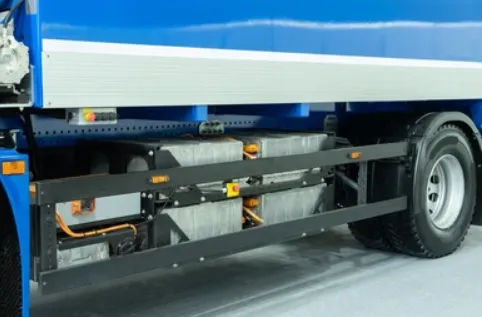
Not every battery labelled “commercial grade” actually earns the title. In 2023, a study by the Electric Power Research Institute found that battery-related failures account for nearly 40% of commercial vehicle roadside breakdowns. That stat should make every fleet manager think twice before choosing cheap. A high-quality truck battery isn’t just about price. It’s about what’s inside the casing, how it handles the workload, and how long it survives doing it.
What Is the First Thing to Look for in a Commercial Truck Battery?
Start with Cold Cranking Amps (CCA). This number tells you how well the battery starts a diesel engine in cold temperatures. A heavy truck engine has high compression. It needs serious electrical force to turn over. Most commercial trucks need between 800 and 1,600 CCA depending on engine size.
A quality battery will meet or exceed the vehicle manufacturer’s minimum CCA specification with room to spare. Cheap batteries often rate their CCA under ideal lab conditions, then underperform in the field. Quality batteries deliver consistent CCA across their rated lifespan, not just when new.
Why Does Cycle Life Matter More Than Initial Power?
Cycle life is how many full charge and discharge cycles a battery can complete before its capacity drops below 80%. For commercial trucks, this is critical. Fleet vehicles don’t just start and drive. They power refrigeration units, hydraulic systems, GPS, lighting, and radios, often without the engine running.
A flooded lead-acid battery typically manages 200 to 300 deep cycles. An AGM battery from a quality manufacturer can handle 500 to 800 cycles under the same conditions. That’s more than twice the working life. Over a fleet of 30 trucks, choosing high cycle life batteries is tens of thousands of dollars saved.
How Important Is Vibration Resistance for Trucks?
Very. This one gets overlooked constantly. Heavy trucks vibrate at high frequency over long distances and rough terrain. That vibration shakes internal battery plates, causes cracking, and accelerates sulfation. A battery that passes vibration resistance testing (SAE J240 standard) is built to handle this.
AGM batteries have a significant advantage here. The glass mat material immobilises the electrolyte and clamps the plates tightly. There’s far less internal movement during vibration. Flooded batteries have free liquid electrolyte, which sloshes and accelerates wear. On long-haul routes, this difference shows up in service life very quickly.
Does Temperature Tolerance Separate Good Batteries From Average Ones?
Completely. Australian fleets operate in some of the most extreme temperature ranges on the planet. Northern Queensland trucks deal with heat that pushes engine bay temperatures past 60°C. Alpine region vehicles face cold starts below minus 10°C.
A quality commercial battery maintains at least 80% of its rated CCA at extreme cold and resists electrolyte boiling in high heat. Look for batteries rated for operating temperatures from minus 40°C to 60°C. Many budget batteries are only tested and rated in the middle of that range. They fail at the extremes, which is exactly when you need them most.
What Role Does Reserve Capacity Play in Quality?
Reserve Capacity (RC) measures how long a battery can run the truck’s essential systems without the alternator running. It’s expressed in minutes. A quality commercial battery for a long-haul truck should offer at least 150 minutes of RC.
This becomes critical during alternator failure. A truck with 150 minutes of RC gives the driver time to reach a safe location. A battery with 60 minutes of RC may leave someone stranded on a highway with hazard lights dying. RC is a safety spec as much as a performance one.
Is a Maintenance-Free Design Worth Paying More For?
Yes, for commercial use it absolutely is. Traditional flooded batteries need periodic water top-ups. That’s time and labour. They also emit hydrogen gas during charging, which creates explosion risk in enclosed spaces. Sealed AGM or VRLA (Valve Regulated Lead Acid) batteries eliminate both issues.
Maintenance-free batteries reduce service intervals, lower labour costs, and remove a layer of risk. For fleets with dozens of vehicles, cutting one maintenance task per battery per year adds up fast. A quality sealed battery pays for itself in saved workshop hours within its first service year.
What Warranty Terms Reflect Build Quality?
Warranty length is often the most honest signal a manufacturer sends about their product’s durability. Quality commercial truck batteries typically carry 24 to 36-month warranties. Anything under 12 months for a commercial product should raise concerns.
Read the fine print. A quality warranty covers both manufacturing defects and early capacity failure. A weak warranty only covers the case cracking or complete failure. The difference tells you how confident the manufacturer is in their own engineering.

Ferderik Moller is a passionate blogger with expertise in massages, relationships, and festivals. He shares unique insights, expert tips, and creative ideas to nurture well-being, strengthen bonds, and elevate the joy of celebrations and special moments.